China Instant Retail Surpasses 1 Trillion Yuan Market Milestone
China's instant retail market exceeded 1.2 trillion yuan in 2025 according to the Ministry of Commerce Research Institute, and is officially projected to surpass the 1 trillion yuan threshold in 2026, reaching 2 trillion yuan by 2030. The sector has maintained annual growth rates above 50% for three consecutive years. Meituan Flash Shopping has emerged as the dominant platform with over 50,000 flash warehouses nationwide, generating annual GMV exceeding 200 billion yuan. For FMCG brands, this represents a fundamental shift in distribution strategy from traditional retail to data-driven instant delivery channels.
County Level Orders Surge 80 Pct Spring Festival Reveals Massive Demand
During the 2026 Spring Festival period, county-level instant retail orders surged by more than 80% year-over-year, far outpacing tier-1 city growth rates. Meituan Flash Shopping has deployed over 10,000 front warehouses in lower-tier markets, covering more than 2,000 county-level regions across China. This data point fundamentally changes the distribution calculus for FMCG brands that have historically focused distribution resources on tier-1 and tier-2 cities. The speed of demand emergence in county markets suggests that brands without a lower-tier distribution strategy risk losing shelf position to more agile competitors.
Gree and Xiaomi Enter Instant Retail Home Appliances Go 30 Minute Delivery
Gree Electric signed a strategic partnership with Meituan Flash Shopping, planning to onboard 13,000 stores nationwide by July 2026, offering buy-ship-install service for full-category home appliances. Xiaomi launched its large home appliance category on Meituan Flash Shopping in April 2026, opening official stores selling air conditioners and monitors. Midea pioneered the instant retail partnership in 2024, with Haier, TCL, and Aux following suit. The expansion beyond FMCG into durable goods signals that instant retail platforms are becoming full-category distribution channels, requiring FMCG brands to compete for warehouse slots and delivery bandwidth with higher-margin product categories.
Distribution Monitoring Becomes Critical as Warehouse Coverage Expands
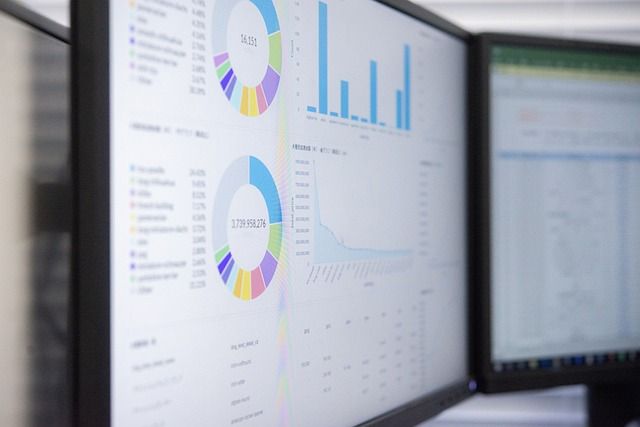
With Meituan flash warehouses projected to reach 100,000 locations by 2027, FMCG brands face unprecedented distribution monitoring challenges. Each warehouse operates as an independent inventory node, and stockout rates in lower-tier markets average 18% higher than in tier-1 cities. Advanced distribution monitoring systems now track real-time inventory levels across all warehouse nodes, automatically triggering replenishment orders when stock falls below threshold levels. Brands utilizing AI-powered distribution monitoring report a 35% reduction in stockout frequency and a 22% improvement in inventory turnover rates compared to traditional distribution models.
Strategic Recommendations for FMCG Brands Entering Tier3 Markets
First, deploy hyperlocal SKU strategies: use consumption heat maps from instant retail platforms to select 15 to 20 high-rotation SKUs per county market rather than replicating full product lines. Second, implement dynamic pricing with guardrails: maintain consistent brand pricing across online and offline channels while enabling location-specific promotional bundles for new market penetration. Third, establish distribution monitoring dashboards: integrate data from Meituan Flash Shopping, JD Daojia, and Taobao Flash platforms to maintain full visibility of inventory levels, delivery performance, and price compliance across all warehouse nodes. Brands that execute this three-pronged approach report 40% faster market penetration and 25% lower distribution costs in tier-3 cities.
FAQ
What is instant retail and how does it differ from traditional e-commerce?
Instant retail delivers products within 30 minutes through local front warehouses, unlike traditional e-commerce which relies on national distribution centers with 1-3 day delivery. China's instant retail market exceeded 1.2 trillion yuan in 2025 and is projected to surpass 1 trillion yuan officially in 2026.
How can FMCG brands monitor distribution across instant retail warehouses?
FMCG brands deploy AI-powered distribution monitoring systems that track real-time inventory levels, stockout rates, and replenishment cycles across all warehouse nodes. Brands using these systems report 35% reduction in stockout frequency and 22% improvement in inventory turnover.
Why are tier-3 cities important for instant retail growth?
County-level instant retail orders surged over 80% during Spring Festival 2026, far exceeding tier-1 city growth. Meituan has deployed over 10,000 front warehouses in lower-tier markets, creating infrastructure for FMCG brands to reach previously underserved consumers.
How does distribution monitoring prevent stockouts in instant retail?
AI distribution monitoring systems automatically trigger replenishment orders when warehouse stock falls below threshold levels, reducing stockout rates by 35%. The system integrates consumption data from multiple platforms to predict demand patterns and optimize inventory allocation across geographic nodes.
What are the key challenges for FMCG brands entering instant retail?
Key challenges include managing inventory across 50,000+ distributed warehouse nodes, maintaining price consistency between online and offline channels, and competing for warehouse slots with higher-margin product categories as instant retail expands beyond FMCG into home appliances and electronics.
Sources
- Sohu — May 9, 2026, Instant retail activates OTC channels beauty brands 30-minute war: https://www.sohu.com/a/1020392693_121845678
- Sohu — May 11, 2026, Deconstructing Meituan flash warehouse profitability model: https://www.sohu.com/a/1021150098_122782914
- Sohu — May 11, 2026, Gree and Xiaomi rush to Meituan home appliance industry transformation: https://www.sohu.com/a/1020872154_122552178
- GDTV — May 8, 2026, Ministry of Commerce retail sales data: https://www.gdtv.cn/tv/baff179afcf4db2968451ef6f8ede209
- Jiemian — May 8, 2026, Meituan wrestles trillion-yuan market: https://en.jiemian.com/article/9235318.html